
Category: Blog
-
Where Biology Meets Electronics: The Next Generation of Bioelectronic Devices
Living tissue speaks in ions. Nerve impulses and the electrical activity that coordinate heartbeats arise from ions moving across cell membranes. Electronic circuits, meanwhile, carry signals through the movement of electrons. How do we build a device that can work with both? Dr Meera Stephen Organic electrochemical transistors (OECTs) do this by bringing a semiconducting…
-
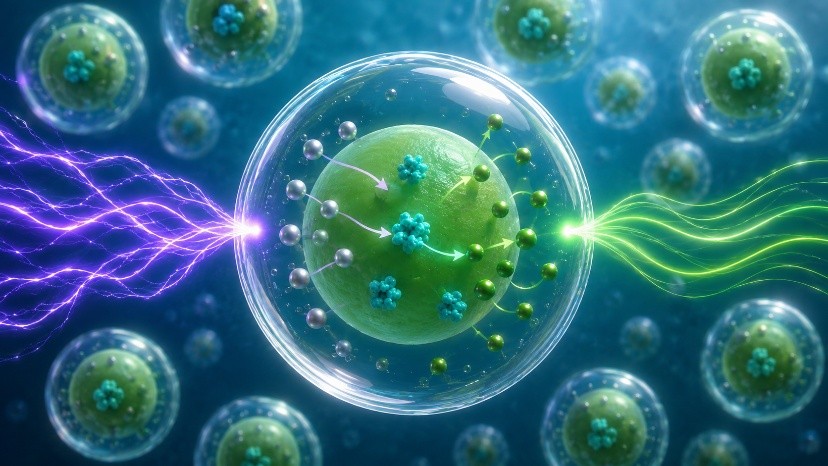
Coacervate-containing droplets reveal how phase separation regulates enzymatic reactions
Dr Geng Yuhao and Prof Atul Parikh Single cells live with a continuous buzz of molecular noise. Both the stochastic nature of gene expression (intrinsic noise) and fluctuations in cellular resources (extrinsic noise) contribute to variability in molecular concentrations. How do cells cope with this heterogeneity? Liquid–liquid phase separation has been proposed as a mechanism…
-

How Small Molecules Reshape Amyloid Networks: New Insights into Protein Aggregation
Dr Radhika V. Nair and Aparna Gollapudi The accumulation and structural transformation of amyloid- proteins, including individual monomers and small oligomers to large, mature fibrils, is central to the pathology of neurodegenerative conditions such as Alzheimer’s disease. Over the years, therapeutic practices have largely focused on targeting individual fibrils. However, a recent study revealed a…
-
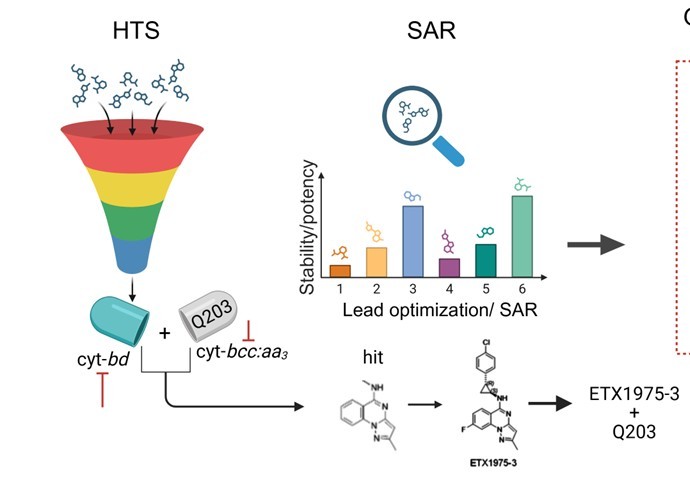
Shutting Off the Power: A New Weapon Against Drug-Resistant Tuberculosis
Dr Samsher Singh and Aparna Gollapudi A new experimental drug has been discovered that doesn’t just attack Mycobacterium tuberculosis alone, it works together with telacebec (a clinical candidate) to ensure the bacterium is left with lesser survival strategies! Tuberculosis (TB) remains one of the world’s deadliest infectious diseases with more than 10 million people developing…
-

How Cells Liquefy Their Crowded Interiors to Survive Stress
Dr Xie Ying and Aparna Gollapudi Imagine navigating a bustling festival crowd where everyone is packed tightly together, yet constantly moving, trading, and interacting. This is surprisingly close to what the inside of a living cell feels like — densely crowded, yet teeming with activity. But what happens when a cell faces life-threatening stress and…
-
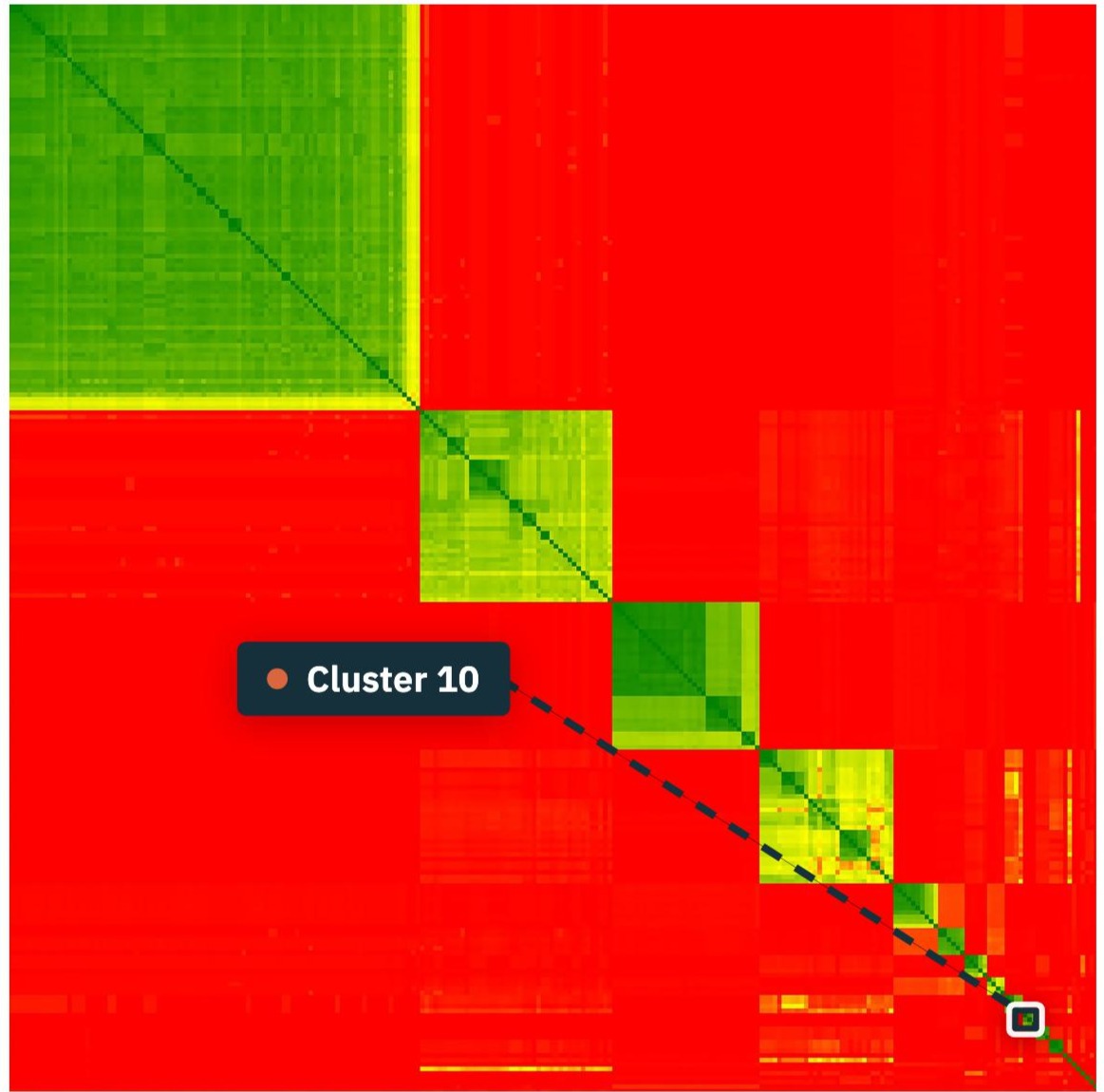
Genomic landscape of complete Acinetobacter phages: clustering, core-shell genes, and synteny insights
Is phage therapy an alternative to antibiotics? This paper by Sean Pang, Wee Soon Keong and Eric Yap attempts to address the question. Read on to learn more about their findings! Acinetobacter baumannii is a multidrug-resistant bacterium that the WHO designated a critical priority pathogen in 2024, with up to 1.4 million cases reported annually.…
-

Repair Condensates and Lipid Domains: A New Frontier in Lysosomal Integrity
The lysosome is the cell’s essential “scavenger”, tasked with sequestering waste and recycling nutrients. However, this digestive hub is a double-edged sword; its internal cocktail of acidic hydrolases is lethal if leaked. Lysosomal Membrane Permeabilization (LMP)—a breach in this barrier—is a hallmark of cellular aging and a primary driver of neurodegeneration and lysosomal storage disorders.…
-
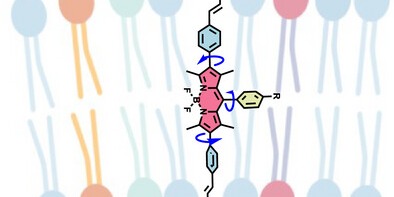
Mechanosensitive Conjugated Oligoelectrolytes for Visualizing Temporal Changes in Live Cells
The paper by Dr Zhu Jiyu and collaborators introduce a new class of environmentally sensitive fluorescent conjugated oligoelectrolytes (COEs) that enable visualisation of temporal changes in live cells, providing not only spatial information on intracellular membranes but also on their physical properties such as membrane composition. Membrane-intercalating conjugated oligoelectrolytes (COEs) are lipid-bilayer-spanning molecules that serve…
-

Conjugated Oligoelectrolytes as Optical Probes
This paper by Jiyu Zhu and others, from Prof Bazan’s group at IDMxS, highlights how by designing smarter molecular probes, specifically conjugated oligoelectrolytes (COEs), scientists can reliably detect and study nanoscale biological systems—turning unreliable measurements into precise, tuneable tools. Optical probes are essential tools for interrogating biological and chemical systems invisible to the naked eye,…
-

Electrochemomics Profiling Metabolic Dynamics in Biofluids
Prof Chen Xiaodong’s group at IDMxS, NTU, in collaboration with Peking University School of Stomatology, Guangdong Provincial People’s Hospital, and other partners, have proposed the Electrochemomics (EC-omics) strategy, a new sensing paradigm for at-home healthcare in the AI era. EC-omics is a new diagnostic strategy developed at the Institute for Digital Molecular Analytics and Science (IDMxS)…