
Imagine a ship springing a leak in the middle of the ocean. Water starts rushing in, and every second counts. But just before things spiral out of control, a crew member plugs the hole with a sealant, buying enough time for proper repairs.
Well, it turns out something similar happens inside your body—at the microscopic level—every single day. When tiny holes form in the membranes of your body’s cellular compartments, the cell’s emergency responders—stress granules—rush in to seal the breach.
IDMxS Principal Investigator, Asst Prof Claudio Bussi, first uncovered how these stress granules stabilise damaged membranes, and the discovery could have big implications for health and disease.
Why Do Cell Membranes Need Protection?
Cell membranes are the barriers of a cell’s internal world. They keep everything that’s supposed to stay in, in—and everything that’s supposed to stay out, out.
For example, lysosomes, often described as the cell’s “recycling centres,” contain powerful enzymes that break down cellular waste. But, if the lysosomal membrane is compromised, these enzymes can leak into the cell’s interior, potentially causing severe disruption and cellular damage. To prevent this, cells activate a suite of emergency repair systems—with stress granules playing a vital role in the process.
So, What Are Stress Granules?
As their name suggests, stress granules form within cells as a rapid response to stress. Typically composed of messenger RNA (mRNA) and proteins, they act as a temporary pause button for protein production, allowing the cell to focus on managing the stress. However, Asst Prof Bussi recently showed that stress granules do more than just pause production—they actively stabilise damaged lysosomal membranes, playing a vital role in preserving cellular integrity.
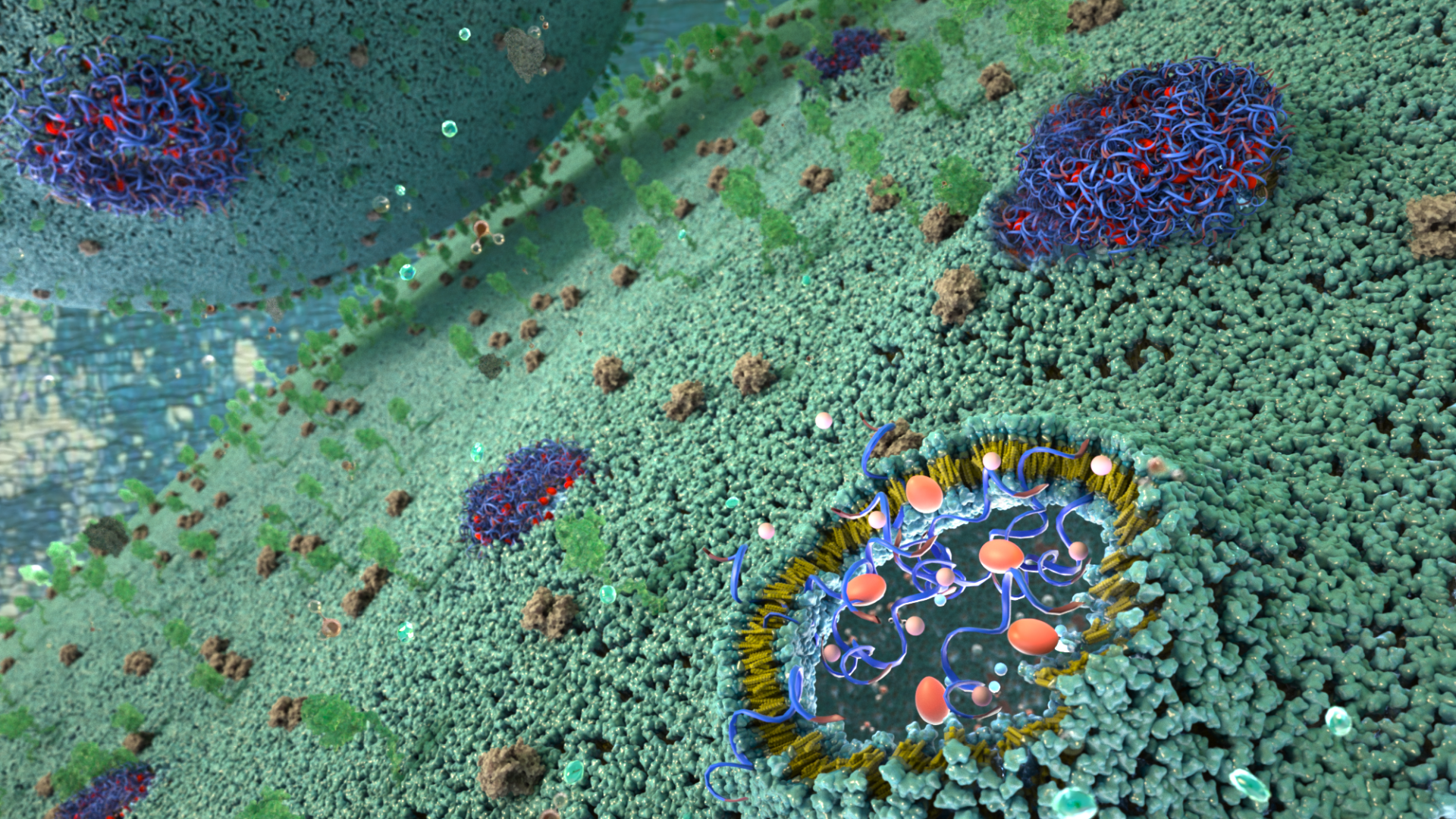
When a lysosome’s membrane is breached, stress granules form rapidly near the damage site—within minutes, in fact. The granules latch onto the broken edge of the membrane and act as a “plug”. This not only prevents the contents of the lysosome from leaking out but also buys time for the cell’s dedicated repair systems to kick in.
How Do Stress Granules Know Where to Go?
How do these granules know where the damage is happening? It turns out that when a lysosome is punctured, the chemical environment around the break changes. Stress granules are primed to recognise these changes, and rapidly assemble on the damaged lysosomal membrane in a process called phase separation.
- Lysosomal damage: The lysosome’s membrane is disrupted, exposing its acidic contents to the cell’s cytoplasm.
- Exposure of the lysosomal lumen: The inner surface of the lysosome, which normally faces the inside of the lysosome, is now exposed to the cytoplasm.
- Triggering phase separation: Specific molecules on the exposed lysosomal surface interact with proteins in the cytoplasm, triggering phase separation.
- Stress granule formation: This phase separation leads to the formation of stress granules, which assemble on the damaged lysosomal membrane.
- Protective barrier: The stress granules act as a protective barrier, preventing the lysosomal contents from damaging the cell and allowing the lysosome to be repaired.
“Our work showed that the exposure to acidic pH is one of the main triggers of stress granule formation. However, there might be other triggers,” explained Asst Prof Bussi.
What Happens After Stress Granules Form?
Once the stress granule forms, it takes an active role in the repair process. The granule’s contents—a blend of RNA and proteins—bind to the edges of the broken membrane, creating a stable, protective barrier. This action reinforces the integrity of the membrane and prevents further leakage or collapse.
Simultaneously, the cell’s specialised repair systems, including the ESCRT complex, engage to permanently seal the breach. This coordinated effort ensures the membrane’s long-term stability and restores normal cellular function.
Why Does This Matter?
Damage to lysosomes is a hallmark of many diseases, including neurodegenerative disorders like Alzheimer’s and Parkinson’s. When proteins like tau or alpha-synuclein (which are linked to these diseases) build up in cells, they can poke holes in lysosomes, causing all kinds of issues. If stress granules can stabilise damaged lysosomes, it could help slow down the progression of these diseases.
There’s also a link to infections. Mycobacterium tuberculosis (the bacteria that causes TB) survives inside human cells by breaking open lysosomes. But if stress granules can act as emergency plugs, they could prevent the bacteria from escaping into the cell’s interior—potentially giving the immune system a better shot at fighting the infection.
What’s Next for This Research?
The discovery that stress granules can plug damaged membranes opens up a world of possibilities. Could we design drugs that make stress granules form faster or stronger? Could this approach protect cells from neurodegeneration or make them more resistant to infections like tuberculosis? This research has far-reaching implications.
For now, Asst Prof Bussi is expanding his research to explore other potential “plugs” or factors that might aid in lysosomal recovery after damage. This ongoing investigation could open new avenues for therapeutic strategies aimed at strengthening cellular repair mechanisms and improving resilience against diseases linked to lysosomal damage.
Read the full paper here: https://www.nature.com/articles/s41586-023-06726-w