
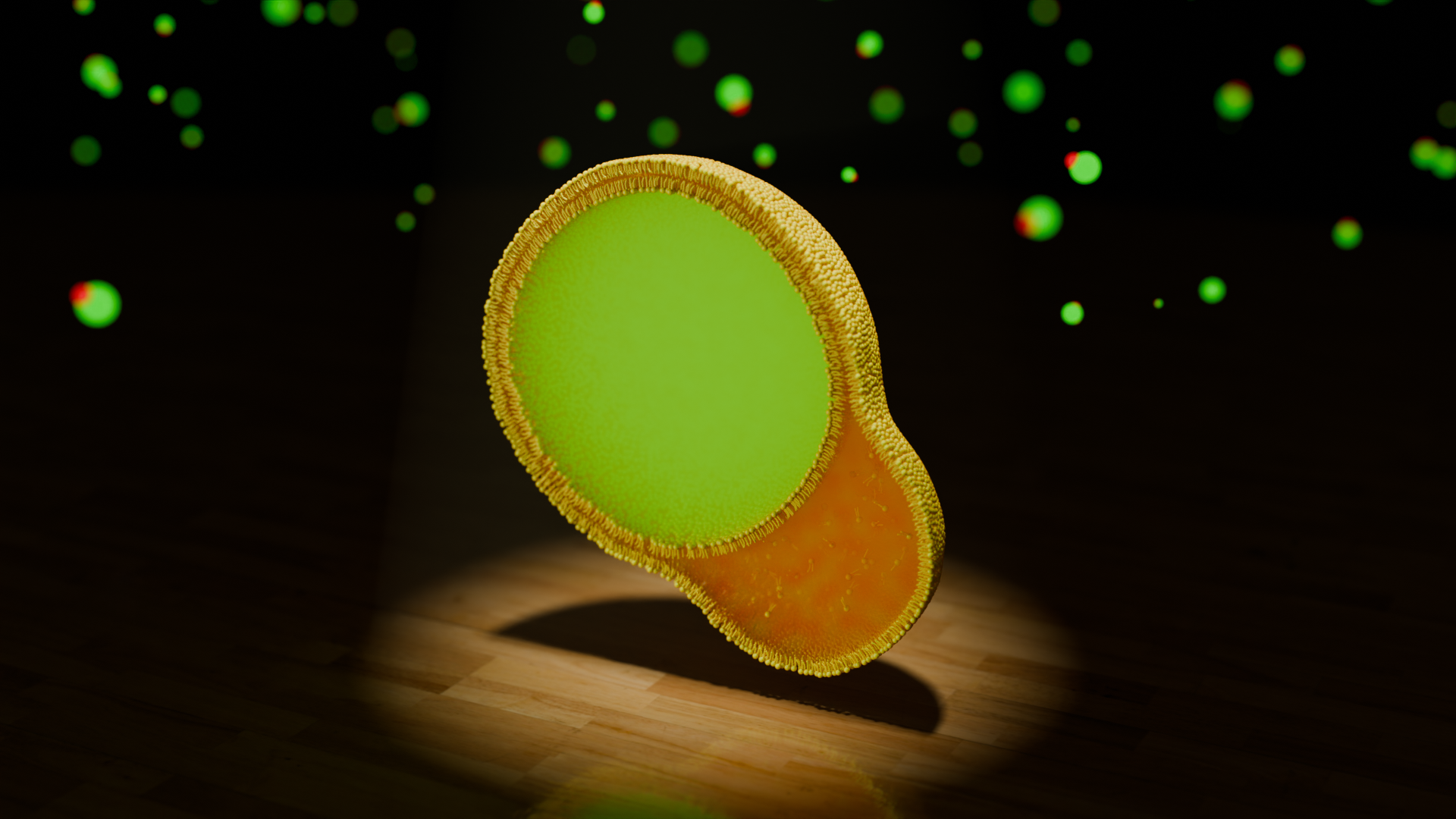
Prof Atul Parikh, Lead for the IDMxS Detection Cluster, published a News & Views article in Nature Chemical Engineering on 25 July. Prof Parikh’s piece, titled “Controlling transport across artificial cell membranes,” delves into groundbreaking research on the dynamic interactions between oil droplets and liposomal membranes, exploring new mechanisms for molecular transport in synthetic cells.
In the article, Prof Parikh reviews the recent paper, “Interfacial energy-mediated bulk transport across artificial cell membranes,” by Assoc Prof Nan-Nan Deng et al., which explains how energy-dissipating oil droplets can form reconfigurable passageways that can shuttle biomolecules across liposomal boundaries.
Prof Deng’s work presents a novel approach for achieving transmembrane transport without the need for sophisticated protein machinery. Their approach also circumvents the conventional endocytic routes in living cells, which induce large-scale membrane disruptions. By leveraging the wetting-dewetting transitions of oil droplets within liposomes, researchers have achieved a programmable movement of the droplets and, thus, the molecular cargoes such as enzymes, ions, and DNA oligomers contained within them.
Prof Parikh’s commentary emphasises the potential of these findings to inspire new strategies in reconstituting cell-like behaviours in synthetic compartments and capsules. It highlights how these oily condensates can provide a generic and less energy-intensive alternative to traditional protein-mediated transport mechanisms. This work not only enhances our understanding of cellular transport but also opens up new avenues for facilitating discrete, quantised, and digital molecular communication and material exchange between single synthetic cells and their surroundings.
For a more detailed exploration of this innovative research, read Prof Parikh’s full News & Views article on the Nature Chemical Engineering website.